The short version
- Solar, the grid and a generator can coexist, but only through a properly interlocked changeover. Two sources must never be able to meet.
- A grid-tied inverter must never back-feed a running generator. That is the single most important sentence on this page.
- A plain on-grid inverter usually will not synchronise with a generator at all — most do not hold frequency and voltage tightly enough.
- The biggest saving on a generator site is usually solar carrying the daytime load, because diesel is the most expensive electricity in the building.
- After solar, your generator is often bigger than you now need. Reviewing its size is a saving almost nobody takes.
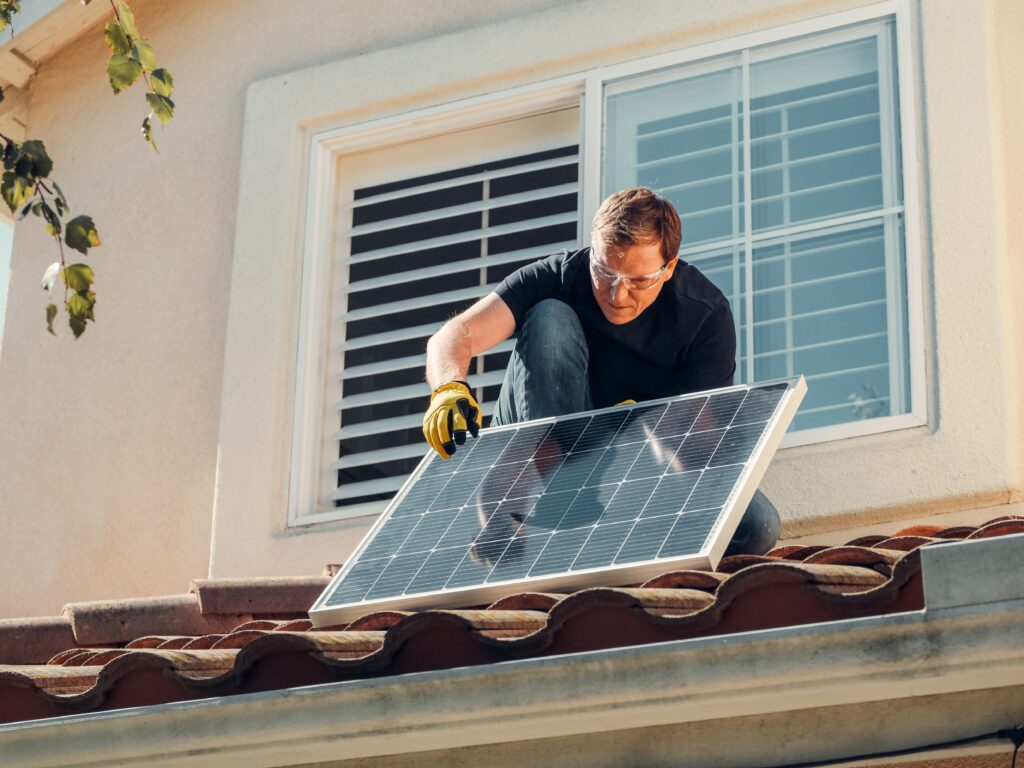
Plenty of Pakistani homes and almost every commercial building already runs a generator. Adding solar to that is a common request and a genuinely good idea — and it is also where we see the most dangerous improvisation on site.
The rule that matters most
The changeover is the whole job. It must be mechanically or electrically interlocked so that the grid, the generator and the solar supply can never be paralleled unintentionally. This is exactly the kind of work our electromechanical division does in its own right, and it is the part of a solar installation where a shortcut stops being merely disappointing and becomes dangerous.
Will my on-grid system work on generator power?
Usually not, and this surprises people who assume electricity is electricity.
A grid-tied inverter needs a stable reference supply to synchronise with. It watches the frequency and voltage, and if they wander outside a narrow window it disconnects — correctly, because that behaviour is what protects the grid. Many generators, particularly smaller ones, do not hold frequency and voltage tightly enough to keep an inverter connected, so the inverter keeps dropping out and reconnecting, or simply refuses to run.
A hybrid inverter designed to accept generator input handles this deliberately, with settings for generator start, acceptable input windows and charging behaviour. Which means the generator has to be part of the conversation before the inverter is chosen, not after — the same argument we made in choosing an inverter.
Tell us what generator you have
Make, rating, and roughly how many hours a day it runs. We will tell you how solar should be integrated with it, what it will save on fuel, and what the changeover arrangement needs to be.
Where the money actually is
On a site that runs a generator during working hours, diesel is almost certainly the most expensive electricity in the building — considerably more expensive per unit than anything the utility charges. That makes the arithmetic unusually favourable.
| What solar displaces | Relative value of each unit |
|---|---|
| Diesel generation during working hours | Highest — this is where to aim |
| Grid units consumed as generated | Full retail rate |
| Grid units stored and used later | Full retail rate, less storage cost |
| Units exported to the grid | Lowest, under net billing |
Read that table from the top down and the design priority becomes obvious: configure the system so solar carries load while the generator would otherwise be running. That is a control and configuration decision, and it is frequently left on default settings by installers who have not thought about it.
The saving nobody takes
Once solar, and where fitted storage, is carrying a meaningful share of the load, the generator is doing considerably less work than it was sized for. Many sites end up running an oversized generator lightly, which is inefficient, hard on the machine and expensive in fuel.
Reviewing generator sizing after the solar system has been running for a few months is a straightforward exercise that almost nobody does. On commercial sites it is often worth more than the last increment of solar capacity would have been.
What a proper integration includes
- An interlocked changeover, so sources cannot be paralleled by accident or by a tired operator at 2am
- An inverter selected to accept generator input, if solar is to run while the generator runs
- Clear priority logic — what runs first, what starts the generator, and when
- Protection coordinated across all three sources, not just on the utility side
- Labelling and documented isolation points, so anyone working on it later knows what is live and from where — part of a proper handover
If a quotation for a generator site does not mention the changeover arrangement at all, that is not an omission in the paperwork. It means nobody has designed it.
Already have solar and a generator that fight each other?
Send us photos of the panel, the changeover and the inverter. We will tell you what is wrong and what it takes to fix it safely.
Solar with a generator: questions people actually ask
Can solar run alongside my generator?
Will solar reduce my diesel consumption?
Can a plain on-grid system work off a generator?
What size generator should I keep after going solar?
What is the most common mistake in these installations?
The bottom line
Solar and a generator work well together when the changeover is properly interlocked and the inverter was chosen knowing the generator exists. They work badly, and sometimes dangerously, when the solar is bolted onto an existing arrangement by someone treating it as a wiring problem.
Tell your installer about the generator on the first visit. It changes the inverter selection, and it is the difference between a design and an improvisation.
Get solar and your generator integrated properly
An interlocked changeover, an inverter selected for generator input, priority logic that targets your diesel hours, and documented isolation points at handover.